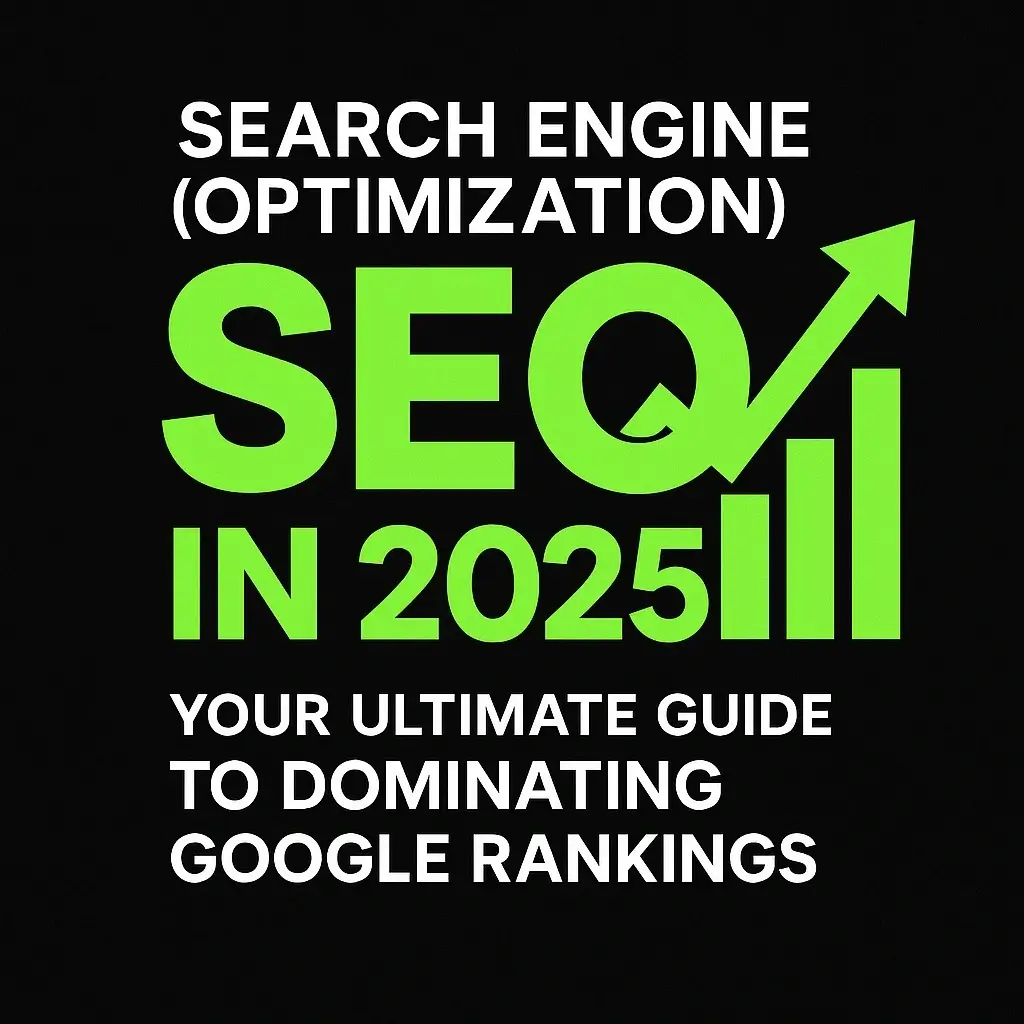
Introduction: Navigating the Evolving Landscape of Search Engine Optimization
In the dynamic digital realm, search engine optimization (SEO) stands as the cornerstone of online visibility and success. As we navigate 2025, the strategies for achieving top Google rankings are more sophisticated and user-centric than ever before. This comprehensive guide will demystify the complexities of modern SEO, providing you with actionable insights and advanced techniques to not only compete but dominate in the search results. Whether you’re a seasoned marketer or just beginning your SEO journey, understanding these principles is paramount to driving organic traffic and achieving sustainable growth for your online presence. We will delve into the core components of SEO, explore the latest algorithmic shifts, and equip you with the knowledge to craft a robust SEO strategy that stands the test of time.
What is Search Engine Optimization (SEO)? A Foundational Understanding
At its heart, search engine optimization (SEO) is the practice of improving the quality and quantity of website traffic to a website or a web page from search engines [1]. It involves understanding how search engines work, what people search for, the actual search queries or keywords typed into search engines, and which search engines are preferred by a target audience. The ultimate goal of SEO is to rank higher in search engine results pages (SERPs), thereby increasing visibility and attracting more qualified visitors to your site. This process primarily targets
unpaid search traffic, often referred to as “organic” results, distinguishing it from paid advertising. By optimizing your website, you are essentially making it easier for search engines to crawl, index, and understand your content, ultimately leading to better rankings and increased online visibility.
The Three Pillars of Modern SEO: Technical, On-Page, and Off-Page
Modern search engine optimization is built upon three fundamental pillars, each crucial for a holistic and effective strategy. Understanding and meticulously optimizing each of these areas is essential for achieving and maintaining high rankings in 2025.
Technical SEO: The Foundation of Search Visibility
Technical SEO refers to website and server optimizations that help search engine spiders crawl and index your site more effectively. It’s the backbone of your SEO efforts, ensuring that your content is accessible and understandable to search engines. Key aspects of technical SEO include:
- Crawlability and Indexability: Ensuring that search engine bots can easily access and understand all relevant pages on your site. This involves optimizing
robots.txtfiles,sitemaps, and addressing crawl errors. - Website Speed and Performance: Fast-loading websites offer a better user experience and are favored by search engines. Optimizing images, leveraging browser caching, and minimizing code are critical.
- Mobile-Friendliness: With the increasing dominance of mobile browsing, a responsive and mobile-friendly website is no longer optional but a necessity for strong rankings.
- Site Architecture: A logical and well-organized site structure helps search engines understand the hierarchy of your content and improves user navigation. This includes clear internal linking and URL structures.
- Schema Markup: Implementing structured data (like JSON-LD) helps search engines better understand the context of your content, leading to rich snippets in SERPs and improved visibility.
- Security (HTTPS): Google prioritizes secure websites. Migrating to HTTPS is a fundamental technical SEO requirement.

On-Page SEO: Optimizing Your Content for Relevance
On-page SEO involves optimizing individual web pages to rank higher and earn more relevant traffic in search engines. This includes both the content and HTML source code of a page. Effective on-page SEO ensures that your content is not only relevant to user queries but also structured in a way that search engines can easily interpret. Key elements include:
- Keyword Research and Targeting: Identifying the most relevant and high-volume keywords for your content and strategically incorporating them into your page.
- Content Quality and Depth: Creating comprehensive, valuable, and unique content that fully addresses user intent. Long-form content (2500-3500 words for this topic) often performs well due to its ability to cover a subject in detail.
- Title Tags and Meta Descriptions: Crafting compelling and keyword-rich title tags (under 60 characters) and meta descriptions (under 160 characters) that encourage clicks from the SERPs.
- Heading Tags (H1-H6): Using a clear hierarchical structure with H1 for the main title and H2-H6 for subheadings to improve readability and signal content importance to search engines. The primary keyword should be in the H1 and at least one H2/H3.
- Image Optimization: Optimizing image file sizes, using descriptive filenames, and adding alt text for accessibility and SEO.
- Internal Linking: Linking to other relevant pages within your website to improve navigation, distribute link equity, and enhance user engagement.
- URL Optimization: Creating clean, descriptive, and keyword-rich URLs that are easy for both users and search engines to understand.
Off-Page SEO: Building Authority and Trust
Off-page SEO refers to actions taken outside of your own website to impact your rankings within search engine results pages. It’s primarily about building the authority and credibility of your website through external signals. The most significant aspect of off-page SEO is link building.
- Backlinks: Acquiring high-quality backlinks from authoritative and relevant websites is a strong signal of trust and credibility to search engines. Focus on earning natural, editorial links rather than engaging in manipulative practices.
- Brand Mentions: Unlinked brand mentions can also contribute to your website’s authority, as search engines increasingly recognize brand signals.
- Social Signals: While not a direct ranking factor, social media engagement can indirectly influence SEO by increasing content visibility and driving traffic, which can lead to more backlinks.
- Online Reviews: Positive reviews on platforms like Google My Business, Yelp, and industry-specific sites can enhance your local SEO and overall brand reputation.

The Evolution of SEO: From Keywords to User Experience and AI
SEO has undergone a significant transformation since its inception in the mid-1990s. Early SEO practices often focused on keyword stuffing and manipulative tactics to trick search engines. However, as search engine algorithms became more sophisticated, particularly with Google’s continuous updates, the focus shifted dramatically towards providing value to the user.
In 2025, the landscape is heavily influenced by:
- User Experience (UX): Google’s algorithms increasingly prioritize user experience signals, including page load speed, mobile-friendliness, core web vitals, and overall site usability. A positive user experience leads to lower bounce rates and higher engagement, signaling to search engines that your content is valuable.
- Search Intent: Understanding and fulfilling user search intent is paramount. Content must directly answer the user’s query, whether it’s informational, navigational, transactional, or commercial investigation.
- Artificial Intelligence (AI) and Machine Learning (ML): AI, particularly Google’s RankBrain, BERT, and MUM algorithms, plays a crucial role in understanding complex queries and delivering more relevant results. This means content needs to be semantically rich and contextually relevant, rather than just keyword-optimized.
- E-A-T (Expertise, Authoritativeness, Trustworthiness): Google’s emphasis on E-A-T, especially for YMYL (Your Money Your Life) topics, means that content creators must demonstrate clear expertise, be authoritative in their field, and build trust with their audience. This involves citing credible sources, having author bios, and maintaining a strong online reputation.
- Voice Search and Conversational SEO: The rise of voice assistants necessitates optimizing content for natural language queries and conversational search patterns.
- Local SEO: For businesses with a physical presence, optimizing for local search queries through Google My Business and local citations is vital.
Distinguishing SEO from SEM and PPC
While often used interchangeably, search engine optimization (SEO), Search Engine Marketing (SEM), and Pay-Per-Click (PPC) are distinct but complementary digital marketing disciplines. Understanding their differences is crucial for a well-rounded online strategy.
- SEO (Search Engine Optimization): Focuses on earning organic, unpaid traffic through improvements in search engine rankings. It’s a long-term strategy that builds sustainable visibility and authority.
- SEM (Search Engine Marketing): An umbrella term that encompasses both SEO and paid search activities. Its goal is to gain visibility in search engine results pages through both organic and paid efforts.
- PPC (Pay-Per-Click): A form of paid advertising where advertisers pay a fee each time their ad is clicked. PPC campaigns offer immediate visibility and are ideal for short-term promotions or highly competitive keywords.
| Feature | SEO | PPC |
|---|---|---|
| Cost | Free (requires time/resource investment) | Paid (cost-per-click) |
| Time to Results | Long-term (weeks to months/years) | Immediate |
| Visibility | Organic search results | Paid ad sections (top/bottom of SERP) |
| Sustainability | Sustainable, builds long-term authority | Stops when budget runs out |
| Control | Less direct control over ranking | Full control over ad placement/budget |
Crafting an SEO-Optimized Article: Best Practices for 2025
Creating content that ranks well in 2025 requires a strategic approach that combines technical proficiency with exceptional content quality and user-centric design. Here’s how to craft an article that stands out:
1. In-Depth Keyword Research
Beyond identifying your primary keyword (e.g., “search engine optimization seo”), delve deeper into related long-tail keywords, LSI keywords, and user questions. Tools like Google Keyword Planner, Ahrefs, Semrush, and AnswerThePublic can provide invaluable insights into what your target audience is searching for. Focus on keywords with a good balance of search volume and low competition.
2. Compelling Title and Meta Description
Your title tag (H1) should be concise (under 60 characters), include your primary keyword early, and accurately reflect the article’s content. The meta description (under 160 characters) should be a compelling summary that entices users to click, also incorporating your primary keyword. These elements are your first impression in the SERPs.
3. Structured and Readable Content
- Clear Heading Hierarchy: Use H1 for your main title, H2s for major sections, and H3s/H4s for subsections. This not only improves readability but also helps search engines understand your content’s structure. Ensure your primary keyword is in the H1 and at least one H2/H3.
- Short Paragraphs and Sentences: Break up your text into short, digestible paragraphs (no more than 3-4 sentences). Aim for an average sentence length of under 20 words, with a maximum of 25% of sentences exceeding 20 words. This significantly enhances readability.
- Bullet Points and Numbered Lists: Use lists to present information clearly and concisely, making complex topics easier to digest.
- Bold and Italic Text: Use bolding to highlight key terms and concepts, and italics for emphasis. This improves scannability and draws attention to important information.
- Subheading Distribution: Ensure that no text block is longer than 300 words without a subheading. This maintains a consistent flow and prevents content from appearing overwhelming.
4. Expertise, Authoritativeness, and Trust (E-A-T)
To establish E-A-T, especially for a topic like SEO, which can impact a user’s financial well-being (YMYL), ensure your content is:
- Expert-Driven: Written by or reviewed by individuals with demonstrable expertise in SEO. Include author bios that highlight their credentials.
- Authoritative: Back up claims with data, statistics, and references to reputable sources (e.g., Google’s official documentation, industry studies, academic research). Provide inline citations [2] and a comprehensive reference list.
- Trustworthy: Maintain accuracy, transparency, and provide a positive user experience. Secure your website with HTTPS.
5. Unique Insights and Fresh Content
While covering foundational SEO principles, strive to offer unique perspectives, original research, or fresh takes on existing concepts. This differentiates your content and provides added value to the reader. Regularly update your article to reflect the latest algorithmic changes and industry trends, ensuring its continued relevance in 2025.
6. Strategic Internal and External Linking
- Internal Links: Link to other relevant pages within your website to improve site navigation, distribute link equity, and keep users engaged with your content.
- External Links: Link out to high-authority, credible external sources to support your claims and enhance your article’s E-A-T. Ensure these links open in new tabs to keep users on your site.
7. Multimedia Integration
Incorporate relevant images, infographics, and potentially short videos to break up text, illustrate complex concepts, and enhance user engagement. Optimize all multimedia for web performance and accessibility (e.g., alt text for images).

Frequently Asked Questions (FAQs) about Search Engine Optimization
An FAQ section not only addresses common user queries but also provides an opportunity to target long-tail keywords and can be eligible for rich snippets in SERPs, further enhancing visibility. Here are some common questions about search engine optimization:
Q1: How long does it take to see results from SEO?
A: SEO is a long-term strategy. While some minor improvements might be noticeable within a few weeks, significant results, especially for competitive keywords, typically take several months (6-12 months or even longer) to materialize. Consistency and patience are key.
Q2: Is SEO still relevant in 2025?
A: Absolutely. Despite the evolution of search engines and the rise of new technologies like AI, SEO remains more crucial than ever. As long as people use search engines to find information, products, and services, optimizing your online presence for search visibility will be essential.
Q3: What are the most important SEO ranking factors?
A: While Google uses hundreds of ranking factors, some of the most critical in 2025 include content quality and relevance, user experience (page speed, mobile-friendliness), backlinks from authoritative sites, E-A-T, and technical SEO soundness.
Q4: Can I do SEO myself, or should I hire an expert?
A: Basic SEO can be learned and implemented by individuals. However, for complex websites, highly competitive industries, or to achieve accelerated results, hiring an experienced SEO professional or agency is often recommended. They possess the expertise and tools to develop and execute advanced strategies.
Q5: How does AI impact SEO?
A: AI and machine learning algorithms (like Google’s RankBrain, BERT, and MUM) are transforming SEO by enabling search engines to understand user intent and content context more deeply. This means SEOs must focus on creating semantically rich, high-quality content that genuinely answers user queries, rather than just optimizing for keywords.
Conclusion: Mastering SEO for Future Success
Search engine optimization is an ever-evolving discipline, but its core objective remains constant: connecting users with the most relevant and valuable content. By embracing the principles of technical excellence, on-page optimization, and off-page authority building, coupled with a deep understanding of user intent and the impact of AI, you can position your website for unparalleled success in 2025 and beyond. Remember, SEO is not a one-time task but an ongoing commitment to providing exceptional value to both search engines and, most importantly, your audience. Implement these strategies diligently, stay updated with industry changes, and watch your organic rankings and traffic soar.