
Introduction: What is Digital Marketing?
Digital marketing is the practice of promoting products, services, or brands through online platforms, tools, and strategies. Unlike traditional marketing methods, such as print ads or television commercials, digital marketing relies on the internet to connect businesses with their target audience in real-time. This connection occurs through a variety of channels, including websites, social media platforms, search engines, and email campaigns.
In today’s world, where the average person spends hours online daily, digital marketing has become a necessity for businesses of all sizes. Whether consumers are browsing social media, shopping on e-commerce platforms, or searching for answers on Google, digital marketing ensures businesses can meet their customers where they are. It enables companies to build trust, increase brand awareness, and drive conversions—all while offering unparalleled reach and measurability.
Why is digital marketing essential in 2025?
As technology continues to advance, the reliance on digital platforms for communication, commerce, and information has skyrocketed. Businesses that fail to adopt digital marketing strategies risk falling behind their competitors in this increasingly connected world.
Core Components of Digital Marketing
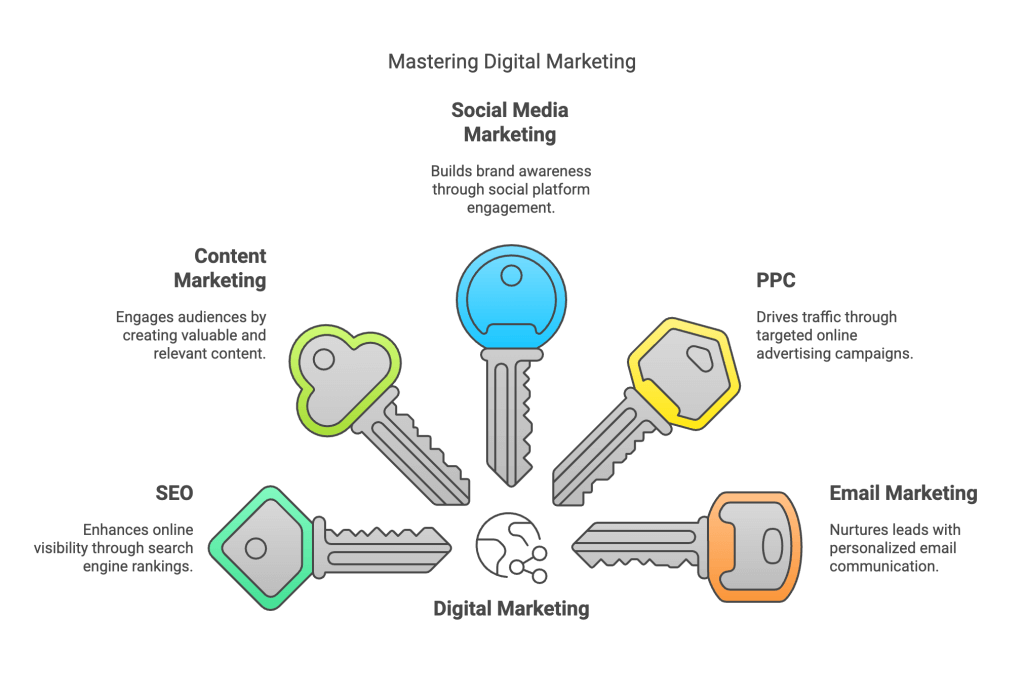
To understand digital marketing fully, you need to explore its core components. These elements form the foundation of any successful online marketing strategy:
1. Search Engine Optimization (SEO)
SEO is the process of optimizing your website to rank higher on search engine results pages (SERPs). It’s one of the most critical aspects of digital marketing, as it drives organic traffic and ensures long-term visibility. SEO is divided into two main categories:
- On-Page SEO: This involves optimizing elements on your website, such as keywords, meta descriptions, headings, and internal links.
- Off-Page SEO: This focuses on activities outside your website, such as building backlinks, guest blogging, and engaging on social media platforms to increase authority.
Example: A local bakery can optimize its website by using location-specific keywords like “best cupcakes near me” or “custom cakes in [city name]” to rank higher on Google’s local search results.
Pro Tip: Use tools like Google Keyword Planner, Ahrefs, or SEMrush to identify high-traffic keywords relevant to your audience.
2. Content Marketing
Content marketing involves creating valuable, relevant, and engaging content to attract and retain a specific audience. This can include:
- Blog posts
- Infographics
- Videos
- Podcasts
- Whitepapers and eBooks
The primary goal is to provide solutions to your audience’s problems, establish your brand as an authority, and guide potential customers through their buying journey.
Example: A fitness brand might publish a blog series titled “Top 10 Home Workouts” or create videos on “Quick Meal Prep Tips for Busy Professionals.”
Pro Tip: Invest in evergreen content—content that remains relevant over time. Examples include how-to guides, FAQs, and case studies.
3. Social Media Marketing (SMM)
Social media platforms like Instagram, LinkedIn, Facebook, TikTok, and Twitter have revolutionized how businesses interact with their customers. Through social media marketing, brands can:
- Share visually appealing content
- Run targeted ad campaigns
- Engage directly with followers through comments and direct messages
Example: A clothing brand might use Instagram to showcase outfit ideas, run flash sales through stories, and collaborate with influencers for greater reach.
Pro Tip: Tailor your content to suit each platform. For instance, LinkedIn works best for professional, long-form posts, while TikTok thrives on short, engaging videos.
4. Pay-Per-Click Advertising (PPC)
PPC advertising is a paid strategy where businesses bid on keywords to display their ads on search engines or social media platforms. You pay only when someone clicks on your ad.
Example: A tech startup can use Google Ads to target keywords like “best project management software” and ensure their ad appears at the top of search results.
Pro Tip: Test different ad copy, targeting options, and keywords before scaling up your budget.
5. Email Marketing
Email marketing remains one of the most effective tools for nurturing leads and maintaining customer relationships. Common email campaigns include:
- Welcome emails
- Abandoned cart reminders
- Seasonal promotions
Example: An online bookstore can send personalized email recommendations based on a customer’s purchase history.
Pro Tip: Segment your email list by demographics, interests, or past behavior to increase engagement.
6. Affiliate Marketing
Affiliate marketing involves partnering with individuals or companies (affiliates) who promote your products in exchange for a commission on sales.
Example: A beauty brand could collaborate with a beauty blogger who shares affiliate links in their “Top 10 Skincare Products” blog post.
Pro Tip: Provide affiliates with high-quality promotional materials, like banners, discount codes, and product descriptions, to ensure success.
7. Influencer Marketing
Collaborating with influencers—individuals with a significant social media following—is an excellent way to gain visibility and credibility. Influencers can showcase your products in a way that feels authentic and trustworthy to their audience.
Example: A fitness influencer can promote a protein supplement by sharing workout tips and including the product in their routine.
Pro Tip: Work with micro-influencers (followers between 10,000–50,000) who often have higher engagement rates and niche audiences.
Benefits of Digital Marketing
1. Cost-Effectiveness
Digital marketing is often more affordable than traditional advertising methods like TV commercials or billboards.
Example: A small local restaurant can use Google My Business and Instagram ads to promote its weekly deals for a fraction of the cost of print ads.
2. Measurable Results
With tools like Google Analytics and HubSpot, businesses can track their campaigns’ performance in real-time.
Pro Tip: Use UTM parameters in your URLs to track the performance of specific campaigns.
3. Global Reach
Digital marketing allows businesses to connect with customers across the globe, unlike traditional methods, which are limited by geography.
Example: An e-learning platform can attract students from various countries through social media ads in multiple languages.
4. Personalization
Digital platforms enable brands to create personalized experiences for users through tools like automated emails, retargeting ads, and tailored recommendations.
Trends Shaping Digital Marketing in 2025
- AI and Automation: From chatbots to AI-driven content creation tools, automation is revolutionizing marketing efficiency.
- Video Content: Platforms like TikTok and YouTube remain dominant, with short-form videos being especially popular.
- Interactive Content: Quizzes, polls, and AR experiences engage users more effectively than static content.
- Voice Search Optimization: As voice assistants like Alexa and Siri become more common, optimizing for voice search is a must.

FAQs
What is digital marketing in simple terms?
Digital marketing is promoting products or services online through platforms like social media, search engines, and email.
What’s the difference between digital and traditional marketing?
Digital marketing uses online channels, while traditional marketing relies on offline mediums like TV or print ads.
What are the key skills needed for digital marketing?
Skills like SEO, content creation, social media management, data analytics, and PPC advertising are essential.
Is digital marketing suitable for small businesses?
Absolutely! It’s cost-effective and allows small businesses to compete with larger brands.
Conclusion
Digital marketing is no longer an option but a necessity for businesses in 2025. Its ability to connect with audiences globally, cost-effectively, and in a measurable way makes it a powerful tool for growth. By understanding its core components and staying ahead of trends, businesses can thrive in today’s digital-first world.